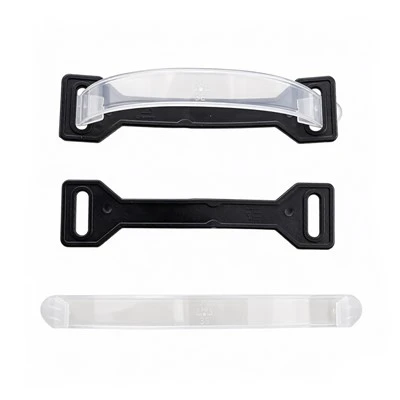
As a provider of plastic carry handles, I often get asked various questions from customers. One recurring inquiry that stands out is about the chemical resistance of our plastic carry handles. This is an important topic because different applications may expose these handles to various chemicals, and the performance of the handles under such conditions can greatly impact their durability and usability. Plastic Carry Handle
Understanding the Basics of Chemical Resistance
Chemical resistance refers to a material’s ability to withstand the effects of chemicals without significant degradation. When a plastic carry handle comes into contact with chemicals, several things can happen. The chemical might dissolve the plastic, causing it to lose its structural integrity. It could also cause swelling, which can change the shape and size of the handle, making it less functional. In some cases, the chemical might react with the plastic at a molecular level, altering its properties and reducing its strength.
The chemical resistance of plastic carry handles depends largely on the type of plastic used in their manufacturing. There are many types of plastics, each with its own unique chemical structure and properties. For example, polyethylene (PE) is one of the most commonly used plastics for carry handles. It is known for its good resistance to many acids, bases, and non – polar solvents. This is because the long chains of polyethylene molecules are held together by relatively strong covalent bonds, and the non – polar nature of the polymer makes it less likely to interact with polar chemicals.
Another widely used plastic is polypropylene (PP). Polypropylene also offers excellent chemical resistance, especially against many organic solvents. It has a semi – crystalline structure, which gives it better mechanical properties and chemical resistance compared to some other plastics. The regular arrangement of its polymer chains makes it more resistant to penetration by chemicals.
Factors Affecting Chemical Resistance
However, the chemical resistance of plastic carry handles is not solely determined by the type of plastic. Several other factors can also play a crucial role.
Temperature: Chemical reactions generally occur more rapidly at higher temperatures. For plastic carry handles, an increase in temperature can accelerate the degradation process when they are in contact with chemicals. For instance, if a plastic handle made of polyethylene is exposed to a mild acid at room temperature, it might show no visible signs of damage for a long time. But if the temperature is raised significantly, the acid could start to break down the polyethylene chains more quickly, leading to a loss of strength and integrity.
Concentration of the Chemical: The concentration of the chemical also matters. A highly concentrated chemical is more likely to cause damage to a plastic carry handle compared to a diluted one. For example, a low – concentration solution of a cleaning agent might not have any adverse effect on a polypropylene carry handle. However, a concentrated version of the same cleaning agent could potentially cause swelling or even chemical reactions that weaken the handle.
Duration of Exposure: The longer a plastic carry handle is exposed to a chemical, the greater the chance of damage. Even if a chemical has a relatively low reactivity with the plastic, prolonged exposure can still lead to cumulative damage. For example, if a carry handle is constantly in contact with a slightly corrosive liquid over a period of weeks or months, it may eventually start to show signs of wear and tear.
Testing Chemical Resistance
To ensure the quality of our plastic carry handles, we conduct a series of chemical resistance tests. These tests are designed to simulate real – world conditions and evaluate how the handles will perform when exposed to different chemicals.
One of the common tests we use is the immersion test. In this test, we cut small samples of the plastic carry handle and immerse them in different chemical solutions for a specified period. We then measure various properties of the samples, such as weight change, dimensional change, and mechanical strength, before and after immersion. A significant weight gain or loss might indicate that the chemical has either dissolved part of the plastic or caused it to absorb the chemical. Dimensional changes can affect the fit and function of the handle, and a decrease in mechanical strength can make the handle more prone to breakage.
We also perform stress – cracking tests. Some chemicals can cause stress cracking in plastics, especially when the plastic is under stress. In these tests, we apply a certain amount of stress to the plastic samples while exposing them to chemicals. This helps us determine if the handle will crack or fail under real – world conditions where it may be both carrying a load and in contact with chemicals.
Applications and Chemical Resistance Requirements
The chemical resistance requirements for plastic carry handles vary depending on their applications.
In the food and beverage industry, plastic carry handles need to be resistant to common food – related chemicals such as acids (e.g., citric acid in fruits and carbonic acid in carbonated drinks), bases (e.g., from cleaning agents), and oils. For example, a plastic carry handle on a juice carton should not be affected by the acidic nature of the juice over time. Our polyethylene and polypropylene carry handles are well – suited for these applications because of their good resistance to these types of chemicals.
In the industrial sector, plastic carry handles may be exposed to a wider range of chemicals, including strong acids, alkalis, and solvents. For example, in a chemical manufacturing plant, carry handles on containers of chemicals need to be highly resistant to the specific chemicals they are holding. In such cases, we may recommend using more specialized plastics or applying protective coatings to the handles to enhance their chemical resistance.
In the household cleaning products industry, plastic carry handles are often in contact with various cleaning agents, which can be acidic, alkaline, or contain solvents. Our carry handles are tested to ensure they can withstand the chemicals commonly found in household cleaners, providing long – lasting performance in these applications.
Benefits of Chemical – Resistant Plastic Carry Handles
There are several benefits to using chemical – resistant plastic carry handles.
Durability: Chemical – resistant handles are more likely to last longer. They can withstand the wear and tear caused by contact with chemicals without losing their strength or functionality. This means that products with these handles will have a longer useful life, reducing the need for frequent replacements.
Safety: In applications where the carry handles are in contact with hazardous chemicals, chemical resistance is crucial for safety. A handle that can resist the chemicals ensures that it does not break or fail during use, preventing spills and potential accidents.
Cost – effectiveness: Although chemical – resistant plastic carry handles may have a slightly higher upfront cost, they can be more cost – effective in the long run. Since they last longer, there are fewer replacement costs, and there is also less downtime associated with replacing damaged handles.
Seeking the Right Solution for Your Needs
As a plastic carry handle supplier, we understand that different customers have different requirements when it comes to chemical resistance. We work closely with our customers to understand their specific applications and the chemicals their handles will be exposed to. Based on this information, we can recommend the most suitable type of plastic and treatment for the carry handles.
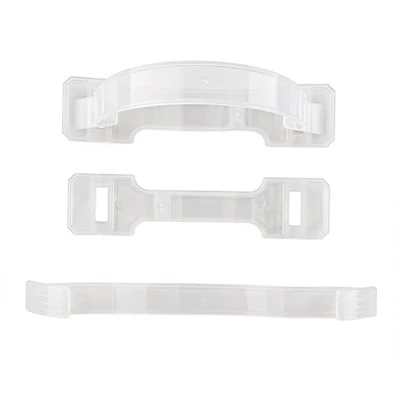
If you are in need of plastic carry handles and have concerns about chemical resistance, we are here to help. Our team of experts can provide detailed information about the chemical resistance properties of our different products. We can also offer customized solutions to meet your specific needs. Whether you are in the food industry, industrial sector, or household products market, we have the expertise and products to ensure your carry handles perform well in the face of chemical exposure.
Packaging Webbing If you are interested in learning more about our plastic carry handles or would like to discuss a potential purchase, please feel free to contact us. We look forward to the opportunity to work with you and provide you with high – quality, chemical – resistant plastic carry handles.
References
- "Plastics Materials" by J. A. Brydson. This book provides in – depth knowledge about the properties and behavior of different plastics, including their chemical resistance.
- "Handbook of Polymer Science and Technology" edited by Herman F. Mark. It covers a wide range of topics related to polymers, with detailed information on how plastics interact with chemicals.
- Industry standards and research reports on plastic materials and their applications in various sectors, which have been used to understand the real – world requirements for chemical – resistant plastic carry handles.
Tengzhou Fujin Plastic Products Co., Ltd.
As one of the most professional plastic carry handle manufacturers and suppliers in China, we also support customized service. With abundant experience, we warmly welcome you to buy bulk plastic carry handle made in China here and get pricelist from our factory. For price consultation, contact us.
Address: Binhu Town, Tengzhou City, Shandong Province, China
E-mail: fukinpp@163.com
WebSite: https://www.tzfujin.com/
