Hey there, let’s cut to the chase—if you’re in the HVAC or refrigeration game, you know air cooled evaporators aren’t one-size-fits-all. Last month, I sat across from a plant manager who’d been running a 1-inch tube evaporator for cold storage, and he couldn’t figure out why his energy bill was through the roof. Turns out, he’d missed a super basic detail: tube diameter. That’s the stuff we deal with every day at our shop, so let’s break it down like we would over a coffee—not too jargon-heavy, honest, straight from the trenches. Air Cooled Evaporators
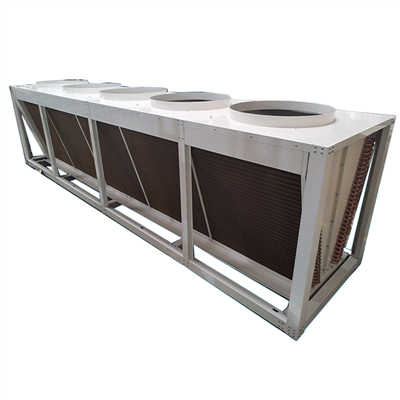
First, let’s nail the basics real quick. An air cooled evaporator’s whole gig is transferring heat: it takes warm air from a space, passes that heat to refrigerant inside the tubes, and spits out colder air. The tube’s diameter isn’t just a “size” on a spec sheet—it’s the backbone of how fast and well that heat swap happens. Smaller tubes? Larger tubes? They don’t do the same job, and picking the wrong one costs you cash, downtime, and headaches.
Let’s start with small-diameter tubes—we’re talkin’ like 3/8-inch up to maybe 5/8-inch, the kind you see in most residential mini-splits or small walk-ins. Here’s the thing: smaller inner diameter (ID) means more internal surface area per cubic inch of refrigerant. Wait, surface area is key for heat transfer, right? Yeah—more of that area touching both refrigerant and the metal wall means faster heat absorption. For a small walk-in cooler, that can be a game-changer. I’ve had a customer who swapped his 5/8-inch tubes for 3/8-inch in his 100 sq ft beer walk-in. His pull-down time went from 22 minutes to 14, and his compressor ran 25% less. Why? Smaller tubes force refrigerant to move faster (faster velocity = less liquid pooling, which kills heat transfer). No stagnant refrigerant means every bit of the metal is working, not just a patch.
But small tubes have a catch—they’re way more prone to clogging. Let’s be real: your system has dust, moisture, maybe a tiny bit of scale from line set installations. Those 3/8-inch tubes? If a speck of debris gets stuck, it can restrict flow overnight, causing the compressor to overwork or even burn out. We saw this last quarter with a restaurant that skipped a line flush after installing a new evaporator—their 3/8-inch lines clogged in 3 weeks, $1,200 in repairs. Also, if you’re dealing with a larger space, small tubes mean more tubes to fit the same total surface area, which adds to material and labor costs. You’re not just buying metal; you’re bending, brazing, and soldering way more small tubes, which cuts into your bottom line. And let’s talk pressure drop: smaller tubes have higher internal friction, so refrigerant works harder to push through, which can raise discharge pressure and spike energy use if the system isn’t sized right. That’s the hidden cost no one tells you about.
Now, larger tubes—3/4-inch and up, common in cold storage warehouses or big industrial chillers. Their superpower is flow. More space inside means refrigerant moves slower, so less pressure drop, easier to handle larger volumes of refrigerant. For a 10,000 sq ft freezer that needs to maintain -20°F, larger tubes are non-negotiable. We outfitted a meat packing plant last year with 1-inch tubes instead of their old 5/8-inch ones, and their pressure drop dropped 40%—so their main compressor used 18% less energy. No more wasting watts just pushing refrigerant through tight pipes. The downside? Larger tubes have way less surface area per unit volume. So if you try to use a 1-inch tube in that small beer walk-in, it’ll take forever to pull down the temperature. The refrigerant’s moving too slow, and only a small part of the tube wall is actually touching the warm air—most of it’s just sitting there, not absorbing heat. We had a guy test this last summer: he ran a side-by-side test with 3/8-inch and 1-inch tubes on a tiny test rig. The 1-inch unit took 38 minutes to get to 35°F, vs. 14 minutes for the small one. That’s a huge difference for a space that turns over air all day.
Wait, there’s a middle ground no one talks about: microchannel tubes. Those are like, ultra-small—1/4-inch or even thinner, flat tubes with internal fins. We’ve been using these more for light commercial stuff lately, but they’re not for every job. Microchannel’s surface area is through the roof, so heat transfer is insane, but they’re also super finicky. If your system has any moisture, it can corrode the fins, or debris can plug the microchannels in a heartbeat. We had a café that switched to microchannel tubes for their pastry case—they saved on refrigerant charge, but 6 months later, a moisture leak in the line set clogged 12 of the 20 microchannels, and they had to replace the whole coil. Lesson: microchannel is great if you keep your system clean and maintained, but not for tough industrial sites where debris or moisture is a given.
Here’s the part we live and breathe: sizing tube diameter depends on three things, full stop. First, the load. If it’s a small, low-load space (walk-in cooler, residential AC), go small. If it’s a high-load, large space (warehouse freezer, industrial chiller), go big. Second, refrigerant type. R-32 and R-410A are higher-pressure, so they handle smaller tubes better, but R-290 (propane, which we work with a lot for eco-friendly systems) needs larger tubes because it’s less dense—you need more volume to get the same heat transfer. Third, maintenance capability. If you’re a small shop with a maintenance tech who’s good with basic flushing, small tubes are fine. If you’re a plant with a lot of dust and debris, larger tubes are less likely to clog, so you’ll have fewer breakdowns.
Let’s wrap this up with a real-world call, because that’s what matters. I can’t tell you how many customers come to us thinking “bigger is better” or “smaller is cheaper,” and they end up with the wrong evaporator. Last month, a brewery almost bought a 5/8-inch tube evaporator for their fermentation space—we talked them into 3/8-inch, since their load was low and they needed fast pull-down to control fermentation temps. That saved them $2,100 on energy in the first 3 months. Another guy, a cold storage manager, tried a small tube unit for his 50,000 sq ft freezer—we helped him switch to 1.25-inch tubes, and his maintenance calls dropped 60% because of less clogging.
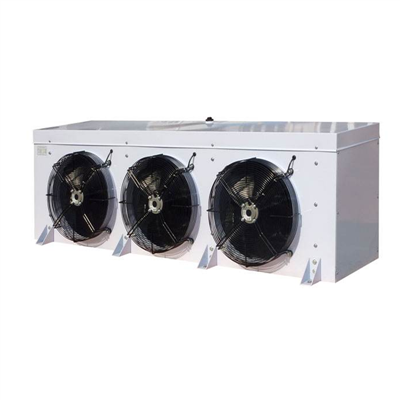
At the end of the day, tube diameter isn’t a spec to check off a list. It’s a decision that affects every part of your system: energy bills, downtime, maintenance costs, even product quality. Too many people overlook this, but that’s where the real savings are. If you’re shopping for a new air cooled evaporator, or your current one is costing you too much in energy or repairs, hit us up. We don’t just sell units—we help you pick the right size, right diameter, for your exact space. No pushy sales, no jargon, just straight talk. We’ll even send a tech out to your site to check your load, your refrigerant, and your maintenance setup to make sure you get the right fit. Don’t let a bad tube size throw your whole system off—let’s get this sorted.
Finned Tube References
- ASHRAE Handbook: Refrigeration Systems and Applications, 2022
- “Heat Transfer Characteristics of Small-Diameter Tubes in Air Cooled Evaporators” – International Journal of HVAC&R Research, 2021
- “Pressure Drop Analysis in Large-Diameter Refrigerant Tubes for Industrial Evaporators” – ASME Journal of Energy Resources Technology, 2020
- Microchannel Coil Performance for Light Commercial HVAC – Air-Conditioning, Heating, and Refrigeration Institute (AHRI), 2023
Xiangshui Derkang Refrigeration Equipment Co., Ltd.
Address: No. 2, Xiaojian Town Entrepreneurship Park, Xiangshui County
E-mail: 505745223@qq.com
WebSite: https://www.xsderk.com/
