As a seasoned supplier of baked pastries, I’ve encountered numerous inquiries from customers and fellow bakers about determining when these delectable treats are perfectly done. It’s a crucial aspect of the baking process, as under – or over – baking can significantly affect the taste, texture, and overall quality of the pastries. In this blog, I’ll share my insights and experiences on how to tell when your baked pastries have reached that ideal state of doneness. Baked Pastries
Visual Cues
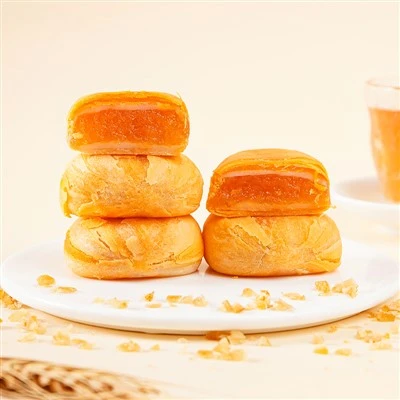
One of the most reliable ways to assess the doneness of baked pastries is through visual inspection. The color of the pastry’s crust can provide valuable clues. For most pastries, a golden – brown color is a sign of proper baking. This color indicates that the Maillard reaction, a complex chemical reaction between amino acids and reducing sugars, has occurred. This reaction is responsible for the development of flavor and aroma in baked goods.
For example, when baking croissants, a rich, golden – brown crust is a telltale sign that they are done. The buttery layers should be crisp on the outside and flaky on the inside. If the croissants are pale, they may be underbaked, lacking that characteristic crunch and flavor development. On the other hand, if they are dark brown or even blackened in spots, they are overbaked, and the croissants will likely be dry and bitter.
In the case of fruit tarts, the crust should be a light to medium golden color. The edges might be slightly darker, which adds a nice contrast in flavor. The fruit on top should also show some signs of caramelization, with a glistening appearance. If the crust is too pale, it will be soft and doughy, and the tart filling may not set properly.
Cheddar scones are another popular pastry. When they are done, the top should have a beautiful golden – brown hue. The cheese on the surface may have developed a slightly crusty, toasted look. If the scones are still pale, the cheese won’t have melted and incorporated fully with the scone dough, resulting in a less flavorful and less cohesive texture.
Texture
Texture is another essential factor in determining the doneness of baked pastries. You can use the touch – test method, but it requires some practice to get it right. For soft pastries like brioche, gently press the top with your finger. If the dough springs back immediately, it’s likely done. If it leaves an indentation, it may need more time in the oven.
When baking puff pastry, the texture should be light, airy, and crispy. You can tell if it’s done by listening to it crackle as it cools. A well – baked puff pastry will have distinct layers that are separated and expanded. If the puff pastry is too soft or chewy, it means it hasn’t been baked long enough to develop those characteristic layers and crispness.
For cookies, the edges are a good indicator. They should be set and slightly golden. Gently slide a spatula under the edge of a cookie. If it lifts easily and the bottom is golden brown, the cookies are likely done. If the cookies are still soft and sticky in the middle and don’t hold their shape when lifted, they need more time.
Internal Temperature
Using a thermometer is the most accurate way to determine the doneness of many types of baked pastries. Different pastries have different ideal internal temperatures.
For bread – based pastries such as pan de dulce, the internal temperature should reach around 190 – 200°F (88 – 93°C). Insert a thermometer into the center of the pastry. If the temperature reads within this range, the bread is fully cooked, and the starches have gelatinized properly.
Pie fillings also benefit from temperature measurement. For example, a custard – filled pie should reach an internal temperature of 170°F (77°C). This ensures that the eggs in the custard are cooked through and the filling is set. If the temperature is too low, the custard may be runny; if it’s too high, the custard may curdle.
Smell
The aroma of baked pastries can also be a helpful indicator of doneness. As pastries bake, the fragrance of the ingredients becomes more intense. When the smell of freshly baked pastries fills the air, it’s often a sign that they are getting close to being done.
For example, the smell of cinnamon and nutmeg in a cinnamon roll becomes more pronounced as the roll bakes. The sweet, warm aroma indicates that the cinnamon sugar has caramelized and the dough has cooked through. Similarly, the smell of chocolate in a chocolate éclair intensifies as the pastry bakes, and the cream filling becomes more fragrant.
Familiarizing with Different Pastries
Each type of baked pastry has its own unique characteristics and doneness cues. It’s important to familiarize yourself with these if you want to produce consistently high – quality baked goods.
Danishes, for instance, are made with a rich, buttery dough and often filled with fruits, nuts, or cheese. The crust of a Danish should be golden brown, and the filling should be bubbling slightly. If the filling isn’t bubbling, the Danish may need more time in the oven to ensure that the filling is heated through and the flavors are fully developed.
Eclairs are filled with a creamy pastry cream and topped with a chocolate or vanilla glaze. The pastry shell should be light and airy, with a crispy exterior. When the éclair is done, the top will have a slight crack, which is a sign that the steam has escaped during baking.
Macarons are delicate French pastries that require precise baking conditions. They should have a smooth, flat top with a slight "foot" around the edge. The macarons should be firm to the touch but still slightly springy. If they are too soft or sticky, they are underbaked; if they are dry and crumbly, they are overbaked.
Importance of Consistency
Consistency is key when baking pastries. Use the same oven, ingredients, and baking times for each batch to achieve consistent results. Factors such as oven temperature variations can affect the doneness of pastries. It’s a good idea to use an oven thermometer to ensure that the temperature is accurate.
If you’re making a large quantity of pastries, rotate the baking sheets halfway through the baking process. This helps to ensure that all the pastries bake evenly. Also, make sure to preheat the oven properly. A cold oven can result in uneven baking and undercooked pastries.
Conclusion

Determining when baked pastries are done is a combination of art and science. By paying attention to visual cues, texture, internal temperature, and smell, you can ensure that your pastries are baked to perfection every time. As a baked pastries supplier, I understand the importance of delivering high – quality products to my customers. Whether you’re a home baker or a professional in the industry, mastering the skill of determining doneness will elevate the quality of your pastries.
Frozen Pastries If you’re interested in sourcing high – quality baked pastries for your business, we’d love to discuss your needs. Our team of experienced bakers is dedicated to producing the finest pastries using the best ingredients. Contact us to start a procurement discussion and see how we can meet your pastry requirements.
References
- "The Professional Chef" by The Culinary Institute of America
- "Bouchon Bakery" by Thomas Keller
- "The Bread Bakers’ Apprentice" by Peter Reinhart
Fujian Luchen Food Co., Ltd.
As one of the most professional baked pastries manufacturers and suppliers in China since 1986, our products have good reputation in the market. Please feel free to wholesale bulk delicious baked pastries from our factory. Good service and quality products are available.
Address: No. 19, Shangxipulou, Nansheng Town, Pinghe County, Zhangzhou City, Fujian Province
E-mail: service@xmnahan.com
WebSite: https://www.luchenbakery.com/
