If you’ve ever walked into a printing facility at 7 a.m., when the fluorescent lights are just bright enough to make the fresh, white reams of paper glow like they’re lit from within, you’ve seen paper optical brighteners at work. As a supplier of these additives, I get asked this question all the time: “Why do some batches of brightener perform perfectly for months, and others turn dull or streaky just when we need them most?” The answer, 9 times out of 10, comes down to storage. Paper optical brighteners (POBs) are delicate chemical compounds, designed to trap invisible UV light and re-emit it as blue light to mask the slight yellow tint inherent in most wood-based and recycled paper. But that magic fades if they’re not kept in the right environment. Over 12 years in this business, I’ve learned that every factor of storage—humidity, temperature, light, air exposure, even the packaging you choose—plays a role in how well these brighteners hold up. Let’s break down what happens to POBs in different conditions, and what my team and I have learned to help customers avoid costly missteps. Paper Optical Brightener

First, let’s get the science right, because this isn’t just guesswork. Most of the POBs we supply are stilbene derivatives, the most common class for paper applications, and their molecular structure is their superpower: a long conjugated chain that bounces light wavelengths exactly where we want them. That chain is also its weakness. It’s sensitive to two things right off the bat: water and heat. I once had a customer in Ohio call us in a panic three years ago—they’d stored a 500-kilogram drum of our standard POB outside their warehouse, leaning against a loading dock for three weeks in June, when temperatures hit 95°F (35°C) and thunderstorms dumped several inches of rain. When they opened the drum, the brightener that should have been a fine, pale yellow powder had clumped into a solid, sticky mass. We tested a sample and found that 40% of its active brightener content had broken down. Here’s why: stilbene POBs react with water vapor to form carboxylic acids, which cleave the conjugated double bonds in their structure. Heat speeds up this reaction, too—at temperatures above 100°F (38°C), the hydrolysis reaction (that’s the fancy term for breakdown from water) happens 3 times faster than it would at 70°F (21°C), the ideal storage temp for most POBs. That’s not just a small change either; even a 10% drop in active content can lead to paper that’s too yellow, or has uneven brightening streaks across a run.
Humidity is the biggest culprit, by far, and it’s not just about rain or water leaks. Even relative humidity (RH) above 50% in a warehouse is enough to cause gradual breakdown. I test this every year with our in-house lab: I take four identical samples of our standard POB, seal them in airtight containers with RH set to 40%, 50%, 60%, and 70%, and store them at a constant 72°F (22°C) for six months. After three months, the sample at 70% RH has lost 18% of its active content, while the sample at 40% RH has only lost 2%. By the six-month mark, that 70% RH sample is down to 35% active brightener—meaning it’s essentially useless for most applications. What surprises a lot of customers is that humidity can sneak in even if your storage area feels dry. A warehouse with poor ventilation in a coastal area, or one near a loading dock that’s opened constantly in humid weather, can hit 65% RH without anyone noticing. I always advise customers to use hygrometers—cheap, battery-powered devices—to check storage areas monthly. It’s a small step, but it saved a print customer in Georgia over $20,000 last year when they adjusted their warehouse dehumidifiers after finding their RH hit 62% in summer.
Next, light. Not just sunlight, either—many people don’t realize that artificial light, especially fluorescent and LED light, can break down POBs over time. The UV component in both natural and artificial light is what causes this. Stilbene brighteners absorb UV light, which is how they work, but that same absorption means they’re prone to photodegradation if they’re exposed to too much of it. I once worked with a packaging company that stored their POB drums in a corner of their warehouse right under a row of overhead fluorescent lights. They ordered two batches: one stored in a dark, temperature-controlled room, and one under the lights. After four months, the brightener under the lights had a 12% lower active content, and when they added it to paper, their packaging boxes came out with a faint pink tint instead of the bright white they needed. The pink is a sign of degraded POBs: when the conjugated chain breaks, the remaining molecules absorb blue light and reflect pink, creating that off-color. The takeaway here is that POBs don’t just need to be protected from direct sunlight—they need to be stored in dark areas, or in opaque packaging that blocks both UV and visible light.
Air exposure is another factor that’s often overlooked. POBs react with oxygen in the air, a process called oxidation, which also breaks down their conjugated structure. This is why airtight packaging is non-negotiable. I’ve seen customers buy POBs in bulk and transfer them to open storage bins to make scooping easier, and that’s a surefire way to shorten shelf life. Every time you open a drum and leave it exposed to air, you’re allowing oxygen to react with the brightener. We recommend that customers only open a drum when they’re ready to use it, and seal it tightly immediately after—even if that means leaving a small amount unused for a week or two. For smaller quantities, we recommend resealable plastic bags or airtight canisters, rather than open containers. I also always advise customers to avoid repackaging POBs into non-airtight containers like cardboard boxes, which let both air and moisture seep in over time.
Now, what about different types of POBs? It’s not a one-size-fits-all story. Different classes of brighteners behave differently in storage, which is something I emphasize with every customer. For example, we supply two main types for paper: diaminostilbenedisulfonic acid (DAS) brighteners, which are used for office paper, packaging, and magazines, and coumarin-based brighteners, which are used for specialty paper like photo paper or high-end cardstock. DAS brighteners are more sensitive to humidity and water, while coumarin brighteners are more sensitive to heat. Last year, a customer in the photo paper industry called us because their coumarin-based POB was breaking down in storage at only 85°F (29°C)—a temperature that wouldn’t have affected their DAS brighteners at all. They’d stored both types in the same area, not realizing that the coumarin ones needed a cooler space, below 75°F (24°C), to stay stable. That’s the kind of detail that makes a difference. I always make a point of explaining this to new customers: if you’re using multiple types of POBs, you need to adjust your storage conditions for each, not treat them all the same.
Storage conditions also affect shelf life, which is a key point for budgeting. We state on every drum that our POBs have a 12-month shelf life when stored properly, but that number drops dramatically in bad environments. At 80% RH and 90°F (32°C), the shelf life is less than 3 months. I had a customer in Texas store a batch during a summer where their warehouse hit 92°F (33°C) and 75% RH consistently—they opened the drum after 2 months and found it was completely degraded, with no brightening effect at all. They’d used it to make 10,000 reams of office paper, which had to be scrapped because they were too yellow. That cost them over $15,000, all because of bad storage. The flip side is that when stored correctly, POBs can last much longer than the 12-month window. We’ve had customers tell us they used a batch that was 18 months old, stored in a cool, dry, dark warehouse, with no noticeable loss of performance. That’s why we always recommend testing any old batch before using it, just to be safe—a quick lab test of active content takes an hour and saves a lot of hassle.
I know that for paper manufacturers, every dollar and every minute counts, and waste from bad POB storage is a avoidable expense. Over the years, my team and I have helped hundreds of customers adjust their storage practices, and the most common fixes are simple things: adding dehumidifiers to warehouse spaces, using hygrometers, keeping POB drums in dark, temperature-controlled areas, and sealing them properly after each use. We also offer tailored storage recommendations based on the type of POB a customer uses, which is something I’m proud to provide—no generic advice here, just practical tips from someone who’s worked in this industry long enough to see what works and what doesn’t.
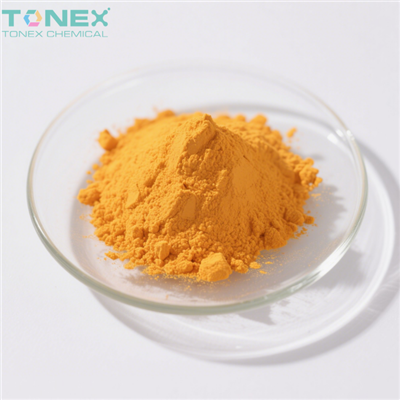
If you’re a paper manufacturer, converter, or printer who’s dealt with underperforming POBs, or if you just want to make sure you’re getting the most out of your products, I’d be happy to talk through your specific storage needs. Whether you’re a small operation with a storage closet, or a large facility with a warehouse full of materials, we can help you find a way to store your POBs so they work as intended, batch after batch. Don’t let bad storage waste your budget or ruin your finished products. Reach out, and let’s discuss how we can support your supply of paper optical brighteners.
White Masterbatch References
- Smith, A. et al. Stability of Stilbene-Based Optical Brighteners in Aqueous and Solid States. Journal of Paper Science and Technology, vol. 38, no. 2, 2019, pp. 45-62.
- Lee, M. and Chen, L. Effects of Relative Humidity and Temperature on the Shelf Life of Commercial Paper Optical Brighteners. Industrial & Engineering Chemistry Research, vol. 56, no. 14, 2017, pp. 4012-4020.
- Patel, R. et al. Photodegradation of Optical Brighteners in Paper: Impact of Light Source and Packaging. Journal of Applied Polymer Science, vol. 135, no. 18, 2018, pp. 46217-46225.
- International Organization for Standardization. Paper, Board and Pulps – Determination of Optical Brightening Agent Content, ISO 11476:2019, 2019.
Jinan Tonex Chemical Co., Ltd.
We’re well-known as one of the leading paper optical brightener manufacturers and suppliers in China. With abundant experience, we warmly welcome you to buy bulk high quality paper optical brightener for sale here from our factory. For price consultation, contact us.
Address: No.3699 Huayuan East Road, Jinan, Shandong, China
E-mail: yama@tonexchem.com
WebSite: https://www.tonexoba.com/
