If you’ve ever leaned into a twisty backroad on a motorcycle, feeling the hum of your engine rise as you roll on the throttle, you’ve got a tiny but critical part to thank for that smooth, responsive power: the throttle body bearing. As someone who’s spent years sourcing and engineering motorcycle-specific bearings for our team, I’ve talked to dozens of riders and mechanics who take this little component for granted—until it fails, turning a crisp throttle input into a sticky, sluggish mess. Today, I want to pull back the curtain on how these bearings work, why they’re non-negotiable for both street and off-road bikes, and what makes our bearings stand out for riders who demand reliability. Motorcycle Bearings
First, let’s ground this in what a throttle body actually does, because you can’t understand the bearing’s role without that context. The throttle body is the gatekeeper between a motorcycle’s air filter and its engine’s intake manifold. When you twist the throttle grip on your handlebar, a steel cable runs from the grip to a shaft inside the throttle body. That shaft is connected to a round, flat valve called a throttle plate. Twist the grip one way, the shaft spins, opening the plate to let more air in; twist it the other, the plate closes to cut air flow. This air mixes with fuel, and that’s what controls how much power your engine makes—more air, more power, plain and simple.
The problem here is friction. That throttle shaft spins thousands of times over the life of a bike, often in tight, dirty spaces. On most street bikes, the throttle body is mounted low near the engine, where it’s exposed to road grime, water, oil mist, and even fine dust from the air filter. Off-road bikes take this a step further, being splashed with mud, dirt, and water on nearly every ride. If there was no bearing between the throttle shaft and the throttle body housing, that metal shaft would rub directly against the metal housing. Over time, friction would wear both surfaces down: the shaft would develop grooves, the housing would warp, and the spin would become stiff or loose. That’s bad enough for a ride—sticky throttle means you can’t adjust power smoothly, which is dangerous around traffic or on uneven terrain—but it can also cause the throttle plate to stick open, leading to unexpected acceleration, or closed, making the engine cut out mid-ride.
So that’s where the throttle body bearing comes in. It’s a small, precision-engineered component that sits between the throttle shaft and the housing, creating a low-friction, smooth rotating interface that lets the shaft spin freely for the life of the bike. But it’s not a one-size-fits-all part—there’s a lot of engineering that goes into making these bearings work specifically for motorcycle throttle bodies, not just generic bearings you’d find in a hardware store.
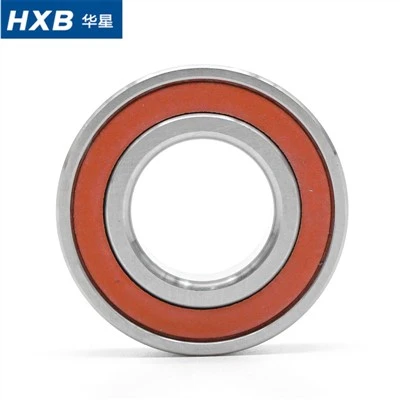
Let’s break down how they work mechanically. Most throttle body bearings are radial ball bearings, the same type you’d find in a bike wheel or a electric motor, but scaled down to fit the tight space inside a throttle body (many are less than 10mm in diameter). A radial ball bearing has three core parts: an inner race, an outer race, and a set of steel balls (or sometimes ceramic balls, for high-performance applications) trapped between the two races by a thin metal or polymer retainer. The inner race fits tightly onto the throttle shaft, so when the shaft spins, the inner race spins with it. The outer race fits tightly into a precision-machined hole in the throttle body housing, so it stays stationary. The balls roll between the two races when the shaft spins, rather than sliding. Rolling friction is way lower than sliding friction—think about how much easier it is to move a heavy box on wheels than to drag it across concrete. That’s the magic here: the balls eliminate almost all direct metal-to-metal contact, so the shaft spins smoothly, even after thousands of rotations.
But motorcycle throttle bodies have unique operating conditions that make these bearings different from, say, the bearings in a blender or a car window. First, they have to handle tiny, precise movements. You don’t twist a motorcycle throttle all the way to the stop every time—most rides involve tiny, millimeters-adjustments to keep power steady. A good throttle bearing has to be smooth even at those small angles, not just when spinning from fully closed to fully open. If the bearing has play (called radial clearance), the shaft will wiggle, and the throttle plate will tilt, disrupting the air flow and making idle rough or acceleration inconsistent. That’s why we work so closely with our machining partners to control bearing clearance to within a few microns—way tighter than standard industrial bearings.
Second, throttle body bearings have to handle exposure to the elements, even though they’re sealed inside the throttle body housing. The housing isn’t completely airtight—water can seep in when you ride through a deep puddle, oil mist from the engine can build up, and fine dust particles from the air filter can work their way past the cable seal. So most throttle body bearings are contact-sealed, meaning they have thin rubber or metal seals on both sides that keep lubricant inside and contaminants out. The lubricant is another critical part: it’s a low-viscosity, high-temperature grease that won’t break down even when the throttle body gets hot—engine bays can reach 150°C or more, and some off-road bikes run even hotter. Cheap, generic greases will turn to sludge in those conditions, leading to stiff throttle in no time. We use a specialized synthetic grease formulated specifically for small, high-speed rotating components, so it stays consistent for thousands of miles without seeping out or attracting dirt.
I’ve seen first-hand what happens when a throttle body bearing fails. A few years back, we got a call from a guy who owned a mid-sized sportbike, he said his throttle had started sticking around 3,000 RPM, making it impossible to accelerate smoothly on the highway. He pulled the throttle body apart and found the bearing had completely rusted through—water had gotten past the seal, mixed with the cheap lubricant, and created a corrosive paste that wore the balls into flat spots. The shaft had grooves, and the throttle plate was so loose it was wobbling. Replacing the bearing fixed it, but he’d spent hundreds of dollars at the mechanic and missed a weekend track day because of it. That’s the kind of avoidable problem we designed our bearings to solve.
What sets motorcycle-specific throttle body bearings apart from off-brand ones is that they’re engineered to match the exact tolerances of the throttle body they go into. A bearing that works on a Yamaha R6 won’t work on a Kawasaki KX250F, because each bike has a slightly different shaft diameter, housing hole size, and operating load. Off-brand bearings often skip the precision machining, use generic greases, or use lower quality steel for the races and balls. That might work for a few hundred miles, but within a year or two, you’ll start noticing that stiff throttle, or play in the shaft, or even a complete failure. As a supplier, we test every batch of throttle body bearings by simulating thousands of throttle rotations under load, exposing them to water and dust, and checking for friction and wear. We also use high-carbon chrome steel for the races and balls—harder and more resistant to wear than the cheap mild steel used in many budget bearings. For high-performance bikes, we offer ceramic ball bearings, which are lighter, more heat-resistant, and have lower rolling friction, so throttle response is even snappier, perfect for track riders or anyone who pushes their engine hard.
Another thing most riders don’t know is that throttle body bearings don’t have a set lifespan. It depends on how you ride. Street riders who mostly commute, keep their bikes in a garage, and clean their air filters regularly might get 50,000 miles out of a set of throttle body bearings. Off-road riders who ride in mud, water, and dust every weekend might need to replace theirs every 10,000 to 15,000 miles. It’s a good idea to inspect your throttle body during your annual maintenance: pull it apart, clean the shaft and housing, and spin the shaft by hand. If it feels stiff, or you hear grinding, or there’s play, it’s time to replace the bearing. It’s a simple job—most mechanics can do it in an hour, and it’s way cheaper than repairing a worn throttle shaft or having a dangerous throttle failure.
At the end of the day, it’s easy to overlook small parts in a motorcycle. We riders spend so much time talking about engines, exhaust systems, tires, and brakes, but the throttle body bearing is the quiet part that makes all that performance accessible. It’s the reason you can roll on the throttle smoothly to pass a car, or adjust your speed by a hair on a twisty road, without worrying about a sticky or unresponsive input. For us, as a motorcycle bearings supplier, that’s what matters: making parts that don’t just fit, that work with the unique demands of riding, so you can focus on what you love, not on mechanical headaches.
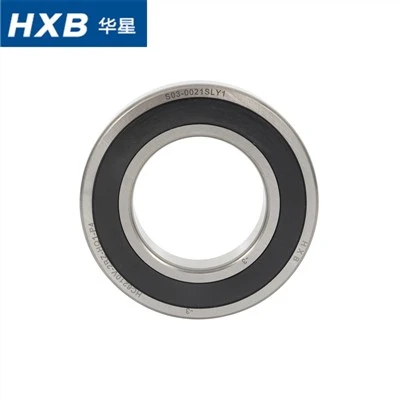
If you’re a mechanic looking for reliable throttle body bearings for your fleet, a bike shop sourcing parts for service, or a rider who wants to upgrade their stock bearings for better performance and longevity, we’ve got you covered. We stock bearings for all makes and models of street, off-road, and performance motorcycles, with options for standard and high-performance applications. We test every component to ensure it meets the standards of professional riders and mechanics, so you never have to worry about a bearing failing mid-ride. Reach out to our team to discuss your specific needs, get part recommendations, or place an order. Let’s make sure your throttle works as smoothly as your ride.
Double Row Precision Cylindrical Roller Bearings References
Shigley, J. E., & Mischke, C. R. (2001). Standard Handbook of Machine Design (3rd ed.). McGraw-Hill.
Jones, F. D., & Hooke, C. J. (2009). Lubrication of Bearings: A Practical Guide (2nd ed.). Butterworth-Heinemann.
Motorcycle Engineering Handbook (2018). Society of Automotive Engineers.
Hangzhou Huaxing Kechuang Holding Group Co., Ltd.
Hangzhou Huaxing Kechuang Holding Group Co., Ltd. is one of the leading manufacturers and suppliers of motorcycle bearings in China, featured by quality products and good service. Please rest assured to buy bulk durable motorcycle bearings from our factory. Welcome to view our website for more information.
Address: No.553 Yingbin Road, Linping, Hangzhou, 311100, China
E-mail: wmb@huaxingbearing.com
WebSite: https://www.hxbbearing.com/
