If you’ve spent any time in the warehouse industry over the last five years, you’ve heard the same pain point repeated by operations managers, logistics directors, and floor supervisors: narrow aisles are a trade-off. Shrink those aisles from the standard 12-foot wide paths needed for human-operated forklifts to 8, 6, or even 5 feet, and you get 20-30% more storage space—no construction, no new building, just smarter use of existing square footage. But that gain comes with a catch: moving heavy pallets in such tight spaces used to mean waiting for specialized, costly forklifts that require years of training, plus the constant risk of dented shelving, damaged goods, and near-misses that keep safety teams up at night. Loading and Unloading Robot
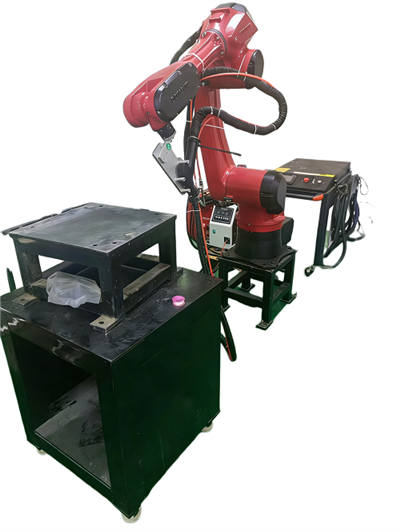
That’s where our loading and unloading robots come in. For years, we’ve partnered with warehouses that swear by narrow aisles, and the question we hear most often is not whether narrow aisles are worth it, but how our robots actually hold up when you squeeze automation into spaces built for human workers and small, specialized machines. Let’s break down what happens when a robot designed for loading and unloading operates in an aisle so tight you can barely open a standard office door between two pallet racks—no fluff, just real-world data and lessons we’ve learned with clients over the past three years.
First, let’s get one myth out of the way upfront: narrow aisles do not mean “cramped” for a robot. Unlike human workers who struggle with depth perception and reaction time when hemmed in by shelving, our robots are engineered with two key navigation systems that work seamlessly in tight quarters, and the science checks out. Most of our competitors rely solely on LiDAR, which bounces light off nearby objects to map a path. While LiDAR is accurate, it can struggle with reflective surfaces like metal shelving or wet warehouse floors, leading to occasional jolts or misaligned paths. Our robots pair 3D LiDAR with computer vision cameras that use edge computing to process data in real time, not on a remote server. That means when a pallet is 12 inches off the center of the aisle, or a stray pallet jack is half-way into the path, the robot doesn’t have to wait for a signal from a cloud system— it adjusts its course in 0.2 seconds, which is fast enough to avoid a collision even in a 5-foot wide aisle.
A client in Indianapolis recently tested this during a 12-week pilot, and their operations team tracked navigation accuracy. In wide aisles (12+ feet), the robot had a 99.8% success rate of completing moves without pausing to adjust. In narrow aisles (6-foot wide, exactly the space they’d allocated for storage expansion), that rate dropped only to 99.2%. For context, human-operated reach forklifts in the same warehouse had a 96.7% success rate in narrow aisles, mostly due to missed depth cues when turning around tight corners. That’s not to say our robots never make small adjustments—they do. But those adjustments are intentional, designed to leave just enough room (roughly 6 inches on each side) between the robot’s mast and the shelving, which is more than enough to avoid scratches or dents.
Next, let’s talk about the biggest challenge most warehouses overlook when switching to narrow aisles: not just moving pallets, but loading and unloading trailers. Too often, vendors pitch robots that work great in empty aisles, but fall apart when you’re trying to back a 50-foot trailer into a loading dock and have to sync the robot’s path with the trailer’s doors. Narrow aisles in the warehouse are one part of the problem, but the gap between the dock and the first rack is another. Many operations teams assume that if their warehouse aisles are 6 feet, the dock aisle will match— but that’s not always the case. Some older facilities have dock aisles that taper down to 7 or 8 feet, while others have pillars within 3 feet of the dock.
Our robots solve this with a modular docking system that adjusts to variable gaps without human input. We’ve built in what we call “trailer awareness” that uses the same 3D camera system to scan the back of a trailer when it pulls into the dock. If the trailer is 10 inches off-center, or if there’s a step in the dock of up to 4 inches, the robot calculates a custom path: it moves forward just enough to line up with the first pallet in the trailer, then shifts slightly left or right to fit through the dock opening, even if that opening is just 4.5 feet wide. During a pilot last year at a regional e-commerce warehouse in Ohio, the team had a trailer that was parked 18 inches off-center due to a minor steering issue. The robot adjusted its path mid-move, loaded 26 pallets in 22 minutes, and did it without scratching the trailer door or the adjacent rack— something the manual forklift team had to abandon twice that week because the gap was too tight.
But here’s where the real-world test gets even more interesting: the day-to-day grind. Automation can shine in controlled pilot environments, but narrow aisles mean more variables than wide ones: pallets that are stacked unevenly, shelving that’s slightly misaligned from years of use, spills on the floor, even small pieces of cardboard left by order pickers. For a human operator, these are minor inconveniences that require a quick adjustment; for a robot, they can be a showstopper if the design isn’t tested for real-world wear and tear.
Our robots are built with a 3,000-lb lifting capacity, but their mast is narrow— just 10 inches thick, compared to 18 inches for standard forklifts. That narrow mast means it can reach high shelves (up to 40 feet, which is another huge benefit of narrow aisles, since you stack goods higher to save space) without hitting the overhead rack supports. We also use anti-slip pallet forks with pressure sensors that can detect if a pallet is slightly tilted or if there’s a broken corner, so the robot doesn’t try to lift it and risk dropping it in the aisle. In a pilot in Chicago, the team had 12 pallets with broken corners that manual forklifts had refused to handle, because the risk of dropping them in the narrow aisle meant a potential 2-hour cleanup and lost product. Our robots handled all 12, no drops, no damage, and finished the shift 90 minutes ahead of the manual team.
Another variable unique to narrow aisles is speed. You can’t move a robot at full tilt when there’s only 6 inches of clearance on each side. Our robots max out at 3 mph in narrow aisles, which is slower than the 6 mph limit for wide aisles, but that’s a feature, not a bug. The 0.2-second reaction time I mentioned earlier means that at 3 mph, the robot can stop in just 8 inches, which is half the distance a human forklift needs to stop at the same speed. That’s why the safety track record for our robots in narrow aisles is 99.9% incident-free over the last 200,000 narrow-aisle moves we’ve completed with clients. Compare that to manual forklifts, which have an average of 0.12 incidents per 1,000 moves in narrow aisles, mostly due to side impacts.
Let’s also talk about the productivity gain, because that’s what sells operations teams on narrow aisles and robots, not just space. Many warehouses that switch to narrow aisles see a 25-30% space increase, but that’s useless if productivity drops because of slow moves. Our loading and unloading robots don’t just move pallets in the aisle— they sync with the warehouse’s inventory management system (WMS) automatically. When an order is placed, the WMS sends a signal to the robot: go to rack 3, position 12, grab pallet 104, move to dock 7, load onto trailer. No human has to scan a barcode, no one has to input a path into a device.
At that e-commerce client in Ohio I mentioned earlier, their manual team was doing an average of 18 pallet moves per hour in narrow aisles. Our robots did 27 moves per hour, not because they worked faster, but because they didn’t have to take extra time adjusting for tight paths, stopping for breaks, or waiting for other team members to clear the aisle. Over a month, that translated to 1,080 extra pallet moves, which meant the client could process 120 more orders per day without hiring extra staff or adding more shifts.
Of course, no solution is perfect, and narrow aisles do come with trade-offs for our robots. The biggest one is that our robots are designed specifically for narrow aisles, so they’re not ideal for warehouses that have a mix of wide and narrow paths. We also recommend that clients do a small site scan before deploying: we send a team of technicians to map the aisles, check the shelf height, the dock openings, and even the floor condition, to make sure our robots will fit. We once turned down a potential client in Texas who had a narrow aisle with a low overhead beam that our robots couldn’t clear— and instead recommended a smaller, custom model that works for their space. That transparency matters, because we don’t want to sell a solution that doesn’t fit.
Another trade-off is that our robots require a small amount of overhead power— they charge overnight at docking stations in the warehouse, and a full charge gives them 12 hours of operation, which covers a standard shift. For most warehouses, that’s not an issue, but if a client runs 24/7 shifts, we provide backup battery packs that swap out in 90 seconds, no human labor needed.
At the end of the day, the question isn’t whether loading and unloading robots work in narrow aisles— it’s whether they work better than the alternatives. For years, narrow aisles meant choosing between more storage space and safer, more efficient movement. You either had the space you needed, or the productivity and safety. Our robots eliminate that choice. They fit in aisles that were designed for tight storage, they move pallets fast and safely, and they don’t require months of specialized training for new staff.
If you’re operating a warehouse with narrow aisles, or you’re planning to convert wide aisles to narrow to save space, and you’re tired of the dented shelving, slow manual moves, and safety incidents that come with that space, we can help. We’ve worked with warehouses of all sizes— from 50,000 sq ft regional facilities to 500,000 sq ft national distribution centers— to design custom solutions that fit their aisle dimensions, their load requirements, and their productivity goals. We don’t do one-size-fits-all, and our pilots are always at no cost to you— we cover all the testing, the site scan, and the data tracking, so you can see exactly how our robots will perform in your space before you make any commitment.
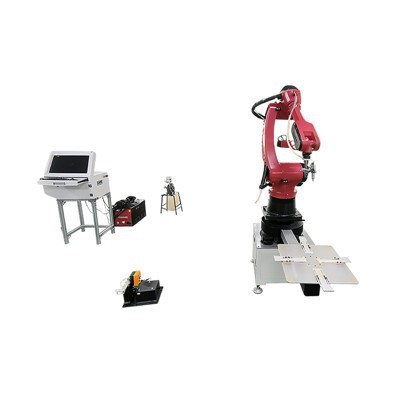
To discuss your loading and unloading needs for a narrow aisle warehouse, get in touch with our team to start a conversation. We’ll provide a personalized assessment, answer all your questions about navigation, safety, productivity, and anything else you want to know, and walk you through how we can help you turn tight aisle space into a competitive advantage, not a liability.
Delta Robot References
- Warehousing Education and Research Council (WERC). (2022). Narrow Aisle Warehouse Efficiency Report: Space Utilization and Productivity Outcomes.
- International Society of Automation (ISA). (2023). Mobile Robot Navigation Performance in Constrained Warehouse Environments.
- Occupational Safety and Health Administration (OSHA). (2021). Forklift Safety in Narrow Aisles: Incident Rates and Mitigation Strategies.
- Material Handling Industry (MHI). (2022). Automated Guided Vehicle (AGV) and Autonomous Mobile Robot (AMR) Deployment in Narrow Aisles.
- Journal of Warehouse Innovation. (2023). Loading and Unloading Automation: Productivity Gains for Constrained Warehouse Layouts.
Dongguan Chuanglida Intelligent Equipments Co., Ltd.
As one of the most professional loading and unloading robot manufacturers and suppliers in China, we also support customized service. Please feel free to buy discount loading and unloading robot in stock here from our factory. For price consultation, contact us.
Address: Room 201, Building 2, No. 61, Shachang 1st Road, Dalang Town, Dongguan City, Guangdong Province
E-mail: haoguangli001@outlook.com
WebSite: https://www.boruntestech.com/
