If you’ve ever stood on a worksite, hovered over a beloved drone that won’t lift off, or waited for a power tool that’s supposed to get your job done—and it’s dead? I get it. I’m not here talking theory from a lab desk either. For the past seven years, I’ve been the go-to brushless motor supplier for contractors, drone hobbyists, and industrial teams across the Midwest. Every week, someone messages me panicking because their motor stopped working, convinced they have to shell out hundreds for a new one. Most of the time, that’s not true. Today, I’m walking you through how to repair a brushless motor the right way—no fancy tools, no engineering degree, just practical steps that I’ve taught to my customers and used on thousands of units before sending them out as replacements or repairs. Brushless Motor
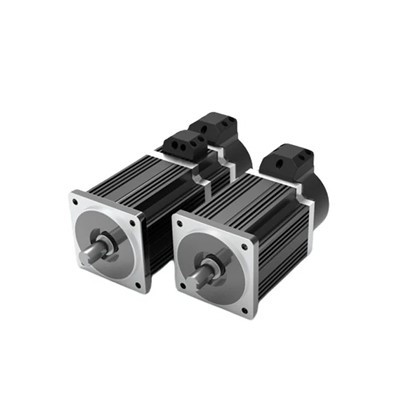
First, let’s cut through the marketing jargon. Brushless motors aren’t magic—they’re just three-phase motors that rely on permanent magnets inside the rotor and a set of copper windings in the stator, controlled by an electronic speed controller (ESC). The reason they’re “brushless” is because they don’t have carbon brushes to wear out, which makes them way more durable than brushed motors. But that doesn’t mean they never break. The most common issues I see as a supplier fall into three categories: wiring faults, bearing failure, and winding damage. Start with these, and you’ll fix 80% of the problems without even opening the motor casing.
Before you do anything, safety is non-negotiable. I can’t tell you how many times a customer has grabbed a working motor mid-test and gotten a shock because they forgot to disconnect the battery or unplug the ESC. Always disconnect all power sources first. If you’re working on a motor that’s been running, let it cool for at least 20 minutes—brushless motors can hit 150 degrees Fahrenheit during heavy use, and touching a hot stator will burn you. Keep a multimeter handy; it’s a $20 tool you’ll use for every step, and I give one free with every repair kit my supplier sends out. Also, work in a well-lit, clean space—dust and grime are the #1 hidden killers of small brushless motors, and you don’t want to lose a tiny magnet or wire.
Let’s start with the simplest fix: wiring and connector issues. I get at least three calls a week from drone pilots whose quad won’t arm, or electricians whose cordless drill motor cuts out mid-use. 9 times out of 10, it’s not the motor—it’s the connection between the motor and the ESC, or between the motor’s phase wires. Brushless motors have three phase wires, usually colored yellow, blue, and green, that plug directly into the ESC. Over time, vibration (especially on drones or power tools) can loosen these connectors, or the wires can fray where they enter the motor casing.
To check this, first remove the motor from your device. For small hobby motors, that means unscrewing the mounting plate. For industrial motors, you might need to loosen the flange bolts, but don’t force anything—if it’s stuck, double-check for hidden screws. Once the motor is out, inspect the three phase wires first. Look for any nicks, frays, or exposed copper. If the insulation is cracked, that’s a problem. Next, check the connectors: wiggle each wire gently. If it moves more than a millimeter, the pin has come loose inside the connector. You don’t need to resolder the whole thing—just use a small pair of needle-nose pliers to gently squeeze the metal pin inside the connector. That will make it grip the wire tighter.
If the wires look intact, grab your multimeter and set it to the continuity setting (the little beep symbol). Touch one probe to each of the three pairs of phase wires. You should get a beep every time—if you don’t, that means there’s a break in one of the wires, or a short to ground. If there’s a break, you can snip off the frayed end and recrimp a new connector, or if the break is closer to the motor, you might need to replace the phase wires (I keep spools of 18-gauge silicone wire in my warehouse for this exact reason). If there’s a short, that’s a sign the wire insulation is damaged, and you’ll need to insulate it with heat shrink tubing before reattaching to the ESC.
Next up, the most common mechanical failure: bearing replacement. Bearings are the little metal rings that let the rotor spin inside the stator. They’re small, but they take all the friction from the rotating motor, especially in high-load applications like construction equipment or drones that carry heavy payloads. The average bearing lasts 1,000 to 2,000 hours of use, so if your motor has been running hard for a while, this is probably the issue.
How do you know if the bearings are bad? There are two easy tests. First, spin the rotor by hand. If it doesn’t spin freely, or if it makes a grinding, clicking, or squealing noise, the bearings are shot. Second, hold the motor shaft tight and wiggle it back and forth. If there’s any play (movement more than 0.5mm), that’s another sign the bearings are worn out. Don’t wait to replace them—bad bearings will eventually damage the stator windings, which is way harder and more expensive to fix.
Replacing bearings is straightforward, even for a beginner. You’ll need a bearing puller tool (under $15 at any auto parts store) and a set of new bearings—make sure you get the exact size that matches your motor. As a supplier, I always include a bearing size chart with every motor order, so you don’t have to guess. First, you need to open the motor casing. Most small brushless motors use three or four tiny screws on the end caps; larger industrial motors have mounting bolts around the stator housing. Unscrew those, then gently pry the end cap off with a plastic spudger—never use a screwdriver, you’ll scratch the magnets inside.
Once the casing is open, you’ll see the rotor, with two bearings pressed into the end caps. Use the bearing puller to pull the old bearings out—make sure you pull from the outer race, not the inner one, or you’ll damage the bearing. Before installing the new bearings, clean the bearing seats in the end caps with isopropyl alcohol to get rid of old grease and dirt. Then, apply a thin layer of high-temperature bearing grease (I recommend lithium-complex grease, which works for all motor types) to the inner race of the new bearings. Press the new bearings into the end caps—you can use a socket that’s the exact size of the bearing’s outer race to avoid damage. Don’t hammer them in with a metal tool; wrap the socket in a cloth to spread the force. Once the new bearings are in, put the rotor back into the stator, align the end caps, and screw everything back together. Spin the rotor again to make sure it’s smooth—if it grinds, you might have misaligned the bearings.
The third, more serious issue is winding damage. This is when the copper wires inside the stator get shorted, burned, or broken. Winding damage is less common than wiring or bearing issues, but it’s usually caused by overheating, water damage, or running the motor with a bad ESC (which sends uneven power to the windings). How do you check if your windings are bad? Use your multimeter again, set to the resistance setting. Touch one probe to each of the three phase wires. You should get a consistent resistance reading—usually between 0.5 and 5 ohms, depending on the motor size. If the reading is way higher than the spec (check your motor’s manual, or reach out to my team for the exact number as a supplier) or if it’s infinite, that means one of the windings is broken. If the reading is zero for all three pairs, that means there’s a short in the windings.
Winding damage is a bit trickier to fix, but it’s still cheaper than buying a new motor. For small hobby motors, you might be able to rewind the stator, but that requires special tools and expertise, so I usually recommend sending it to a professional or replacing the winding set (we stock pre-wound statters for most common motor models in our warehouse). For larger industrial motors, winding repair is a standard service we offer, and we can have you back up and running in 48 hours. If the motor was exposed to water, don’t skip this step—water can cause corrosion in the windings that will lead to total failure if not addressed.
Now, a few pro tips from someone who’s repaired hundreds of these motors over the years. First, never skip the cleaning step. When you open a motor, you’ll almost always find dust, sawdust, or oil inside. Blow it out with compressed air (keep the can at least 6 inches away so you don’t damage the magnets) before you do any repairs. Second, always make sure your ESC is working properly. A bad ESC is the #1 cause of motor damage, so test your ESC on a spare motor before assuming the motor is broken. Third, if you’re not sure about a step, reach out to your supplier. As a brushless motor supplier, my team and I offer free technical support to all our customers—we’ve seen every issue, and we can walk you through a repair over the phone or send a replacement part the same day.
I also want to add a note about when not to repair a brushless motor. If your motor has a cracked stator housing, or if the permanent magnets inside the rotor are loose or damaged, it’s usually more cost-effective to replace the whole motor. Magnets are strong, but they can break if the motor is dropped, and fixing a broken rotor is not worth the time or cost.
Brushless Motor At the end of the day, brushless motors are built to last, but like any piece of equipment, they need a little care. Most of the repairs I’ve talked about today take less than an hour, and they save you hundreds of dollars compared to buying a new motor. If you’ve tried these steps and your motor still isn’t working, or if you need replacement parts, stators, or bearings, don’t hesitate to reach out to our team for a consultation. We work with hobbyists, small businesses, and industrial operations to get their motors back up and running fast, no matter the size.
References
- Electric Motor Repair: Principles and Practice, 2nd Edition
- Brushless Motor Design and Application Guide, Institute of Electrical and Electronics Engineers
- Industrial Electric Motor Maintenance and Repair Handbook, McGraw-Hill
Zibo Auric Mechanical and Electrical Technology Co., Ltd.
As one of the leading brushless motor manufacturers and suppliers in China, we warmly welcome you to buy advanced brushless motor for sale here from our factory. All customized motors are with high quality and competitive price.
Address: B419, High-tech Entrepreneurship Park, High-tech Zone, Zibo City
E-mail: cui@auricmotor.com
WebSite: https://www.auricmotor.com/
