If you’ve ever reached out to a custom printed PVC film supplier for a quote, you’ve probably hit the same wall I’ve heard dozens of my customers complain about: that “minimum order quantity” line that pops up out of nowhere, like a hidden rule no one bothered to tell you before. I’m Jake, and I’ve spent the last 12 years running this small, family-owned custom printed PVC film company—so let me tell you, it’s not a random number we pick out of a hat. It’s the result of math, material science, and a whole lot of lessons learned from clients who’ve tried to skip it only to end up frustrated (or with a bill that made their eyes water). Let’s break down what the minimum order quantity (MOQ) for custom printed PVC film actually is, why it matters, and how to figure out what’s right for your project. Custom Printed PVC Film
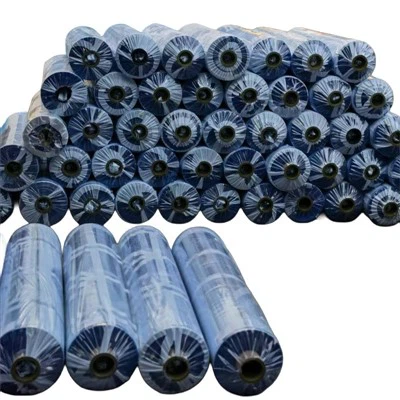
First, let’s get one thing straight: there’s no universal MOQ in this industry. You’ll see numbers ranging from 500 linear feet to 50,000 linear feet, and sometimes even higher, depending on what you’re making. The type of PVC film you’re using, the complexity of your design, the printing method, and even the size of your finished product all play a role. Let’s start with the basics of what custom printed PVC film production looks like, because that’s where the MOQ puzzle starts.
Most custom printed PVC film we work with falls into two main categories: calendered PVC and cast PVC. Calendered PVC is the more common, lower-cost option we use for things like product packaging sleeves, signage decals, and shelf talkers. It’s made by rolling PVC resin through a series of heated rollers to create thin, uniform sheets, which makes it flexible and easy to print. Cast PVC, on the other hand, is thinner, more durable, and used for things like medical device components, outdoor banners, or high-precision labels—stuff that needs to hold up to extreme temperatures or UV exposure. The production processes for these two types are totally different, so their MOQs will vary a lot.
Let’s talk about our core process for calendered PVC first, because that’s what most small to mid-sized businesses come to us for. When we get a custom order, the first step is prep: we create a printing plate (or digital file, if it’s a small run) that matches your design. For flexographic printing—still the most common method for large runs of PVC film—each color in your design needs its own individual rubber printing plate. Making a single plate costs about $80 to $120, right? So if you order 500 linear feet of film, you’re paying for that $100 plate, plus the cost of material, labor, and setup. That adds up fast, even for a small job. We can’t just print 100 linear feet without running the press through a full setup, because the machine needs time to calibrate, adjust ink viscosity, and get the registration (the alignment of colors) perfect. If we only ran a tiny strip, the cost per linear foot would be so high that no one would buy it. For that reason, our standard MOQ for standard calendered PVC film with up to 5 colors is 2,000 linear feet. That number isn’t arbitrary—it’s the sweet spot where we can cover the cost of setup and plates without passing all of that extra expense to you.
But wait, what if you have a smaller project? Maybe you’re a small bakery testing new packaging sleeves, or a local craft brand making 1,000 custom decals for a holiday sale. We get it—2,000 linear feet is way more than you need, and you don’t want to be stuck with leftover film that goes to waste. That’s why we also offer digital printing for short runs, and our MOQ for digital printed PVC film is just 500 linear feet. Digital printing skips the plate-making step entirely, so we can set up the press faster, and we don’t have the same overhead cost that comes with flexo. The tradeoff? Digital printing isn’t ideal for designs with more than 6 colors, and the ink adhesion is slightly different—great for indoor uses, but not the best for outdoor products that need to last more than a year. So that 500 linear foot MOQ is perfect for small, low-complexity projects.
Now, let’s move to cast PVC, because that’s where the MOQ gets way higher. Cast PVC production is more labor-intensive and material-heavy. The film is made by pouring molten PVC resin onto a moving belt, then casting it into ultra-thin, uniform sheets—often 0.001 to 0.005 millimeters thick, compared to calendered PVC which is usually 0.01 to 0.5 millimeters. Printing cast PVC also requires a different process: many of our cast PVC clients are in medical or industrial fields, so they need high-precision, defect-free film that meets FDA or ISO standards. The setup for cast PVC printing involves way more calibration: we have to control for static electricity (cast PVC is super prone to static, which messes up ink placement), test ink adhesion for medical-grade applications, and run quality checks every 500 linear feet to make sure there are no pinholes or tears. Add to that the fact that cast PVC rolls are often much longer than calendered rolls, and waste during setup is higher. Our MOQ for custom printed cast PVC is 10,000 linear feet. That’s not because we’re trying to lock you into a huge order—if someone needed 5,000 linear feet for a specialized medical prototype, we’d work with them, but that would require a custom quote because the setup cost would be much higher than our standard rate.
I can already hear some of you thinking, “Wait, I’ve seen other suppliers advertise MOQs as low as 100 linear feet. How do they do that?” That’s a question we get all the time, and the answer is usually one of two things. Either they’re using leftover roll stock and printing small custom runs on that—meaning the design isn’t fully customized, it’s just a small print on a standard roll of PVC—or they’re cutting corners on quality. We’ve heard horror stories from clients who used a supplier with a 100 linear foot MOQ, only to get film that had misaligned colors, ink that peeled off after a month, or pinholes that ruined 20% of their product. For us, MOQ isn’t about locking you into a big order—it’s about making sure you get a product that works for your business, at a fair price. If we printed every small order at a loss just to hit a lower MOQ, we wouldn’t be able to keep our prices consistent for our regular clients who order 50,000 linear feet a month.
Another factor that affects MOQ is the size of your finished film. Wait, size? Like, if my film is 2 inches wide vs. 10 inches wide, that changes MOQ? Absolutely. Let’s do a quick example: a roll of PVC film that’s 10 inches wide is 10 times wider than a roll that’s 1 inch wide, so each linear foot of the 10-inch roll is 10 square feet of film, while the 1-inch is 1 square foot. So if your project needs small, narrow film strips (like product tags for small bottles), our MOQ per linear foot is lower, because each linear foot covers more units. For a 1-inch wide custom printed calendered PVC strip, we’ll often work with MOQs as low as 1,000 linear feet, because you can cut that into thousands of individual tags. But if you’re making large banners that are 4 feet wide, 2,000 linear feet would be 8,000 square feet of film—way more than most small businesses need, so we’d adjust the MOQ to 500 linear feet for large-format prints, since each linear foot is a big, usable piece of film.
We also tailor MOQs for specialty projects. If you’re using PVC film with special properties—like fire-retardant PVC, or PVC that’s compliant for food packaging, or PVC that needs to be UV-resistant for outdoor use—the MOQ goes up. That’s because these specialty films are more expensive to source, and each roll has higher minimums from the raw material supplier. We can’t order a single 500 linear foot roll of fire-retardant PVC; our raw material supplier requires us to order at least 5,000 linear feet of that specific film, so our MOQ for custom printed fire-retardant PVC is 5,000 linear feet, just to cover the raw material cost. It’s all interconnected.
Now, let’s talk about what you can do if your project doesn’t fit our standard MOQs. A lot of first-time clients come to us with a small idea, and they’re worried they can’t work with us because they don’t hit the 2,000 linear foot mark. Here’s the thing: we’re not a giant corporate factory that only runs mass orders. We’re a small team, and we’re used to working with startups, artists, local businesses, and nonprofits on projects of all sizes. If you have a project that’s a prototype, or a limited run, or something that just doesn’t fit our standard MOQ, we’ll build a custom quote for you. Last year, we worked with a local author who wanted 1,200 custom PVC book sleeves for a small book tour. That’s 800 linear feet of film, which is below our standard MOQ, but we adjusted the quote to include a slightly higher per-foot rate, and we ran a tight setup to make sure it was perfect. She ended up using the sleeves as a giveaway, and they were such a hit that she came back 6 months later for 10,000 linear feet for a national release. That’s the kind of relationship we build here—we don’t turn away good projects just because they don’t hit a random number.
I also want to bust a common myth about MOQs: they’re not just for suppliers to make more money. Let’s do the math for a standard flexo custom print order to show you what I mean. Suppose we have a client who wants 2,000 linear feet of 3-inch wide calendered PVC, with 3 colors. The plate cost is $90. The raw material cost per linear foot is $0.15. Labor to set up the press, run the film, and do quality checks is about $0.20 per linear foot. Adding that up: $90 (plate) + (2,000 * $0.15) (material) + (2,000 * $0.20) (labor) = $90 + $300 + $400 = $790 total. That works out to $0.395 per linear foot, which is a fair price for the client, and it covers our costs plus a small profit to keep the lights on. Now, if that same client only ordered 1,000 linear feet, the same $90 plate cost is added, so total cost is $90 + $150 + $200 = $440, which is $0.44 per linear foot—11% more expensive. If they ordered 500 linear feet, total cost is $90 + $75 + $100 = $265, which is $0.53 per linear foot, a 34% increase. That’s why the MOQ is there: to keep your cost per unit as low as possible, because we can spread the fixed costs (plates, setup, calibration) over more linear feet.
So, what’s the takeaway here? The minimum order quantity for custom printed PVC film isn’t a number we pull out of thin air—it’s a balance between material costs, production processes, and fair pricing for our clients. For most standard projects, expect an MOQ between 500 and 10,000 linear feet, depending on the type of PVC, printing method, design complexity, and finished size. For small, short-run projects, digital printing can get you lower MOQs, while specialty or high-precision projects will have higher MOQs due to raw material and production constraints.
If you’re ready to talk through your custom printed PVC film project, whether it’s 500 linear feet for a test run or 50,000 linear feet for a full product line, we’d love to hear from you. We don’t do one-size-fits-all quotes here—we’ll walk you through all the options, explain MOQs clearly, and work with you to find a solution that fits your budget and your timeline.
PVC Printing Film References
- PVC Film Manufacturing: Processes, Properties, and Applications. Plastics Industry Association, 2022.
- Flexographic Printing for Flexible Packaging: Best Practices and Cost Considerations. Packaging Digest, 2021.
- Cast vs. Calendered PVC: Key Differences for Industrial and Medical Applications. Industrial Plastics Magazine, 2023.
- Cost Analysis of Short-Run Custom Printing. Print Action, 2022.
Nantong Dahe Composite New Material Technology Co., Ltd.
Address: South Side of Pinghai Highway, Pinghe Village, Dongshe Town, Tongzhou District, Nantong City, Jiangsu Province, China
E-mail: nantongdahe@outlook.com
WebSite: https://www.cndahetech.com/
