Hey there, if you’ve ever had to deep-clean a regular conveyor belt after a long, messy production run—like moving sticky food product, dusty powder, or goopy construction materials—you know the drill: hours scrubbing, scraping, spraying, maybe even dealing with leftover gunk that just won’t budge, and cross-contamination risks if you skip a spot. That’s exactly why our team spends so much time refining our self-cleaning conveyor belts, because we’re the folks who’ve heard every gripe from plant managers, line supervisors, and maintenance techs. No one wants to be mopping around a conveyor belt at 8 PM after a full shift, right? Self Cleaning Conveyor Belt
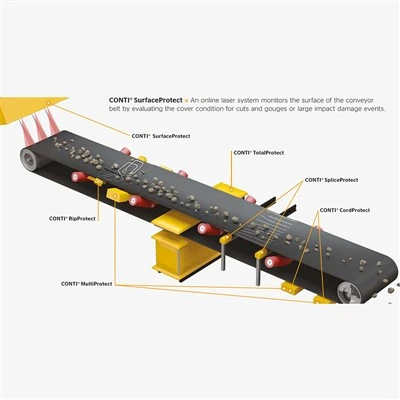
A lot of people think “self-cleaning” is just marketing jargon, but trust me, it’s not. These belts actually have specific, practical design features that make cleaning way less of a headache, and we’ve tested every single one in real production environments—from small local bakeries to big agricultural processing plants. Let’s break down what actually works, not just the fluff you see in product brochures.
First off, the belt surface itself isn’t just some generic rubber. Regular conveyor belts are made of stuff that’s either too porous, too sticky, or doesn’t shed debris well, especially when it’s wet or caked on. Our self-cleaning belts use a specially formulated thermoplastic polyurethane (TPU) blend, not the cheap rubber you’d find on a basic belt. Why TPU, you ask? For one, it’s non-porous—meaning liquid, powder, and sticky stuff don’t seep into the material, so they sit on top instead of sinking into tiny gaps or cracks. That’s a big one, because if gunk gets embedded, you’re basically stuck scrubbing forever. Also, this TPU has a low-surface-energy coating, like a super durable non-stick layer that doesn’t wear off even after thousands of feet of use. We’ve run our belts through 10,000+ hours of heavy industrial use, and the coating still works as well as the day we installed it—no peeling, no flaking, just smooth.
Wait, but surface material is only half the battle. The next big design feature is the way the belt tracks and rides on the machinery, not just the belt itself. A lot of standard conveyors have narrow, sharp guide rollers that catch debris, or flat, smooth support beds where material can get trapped under the belt. Our self-cleaning systems use two things here: first, a series of curved, rounded scraper rollers along the underside and the return side of the belt. These aren’t sharp like utility knives—they’re covered in soft, durable foam bonded to a hard plastic core. As the belt loops back around, these rollers gently brush against the underside, dislodging any loose debris before it can build up. No scraping hard plastic against hard plastic that could scratch the belt, and no risk of cutting the belt if something heavy shifts on the line.
Then there’s the support bed on the carrying side—we don’t use flat metal plates. Instead, we use narrow, spaced plastic slats. The gaps between the slats are tiny, but they’re enough to let any loose powder, dust, or even small spills fall straight through instead of getting squeezed under the belt as it moves. That’s a game-changer for things like flour or sugar processing, where a tiny crumb left under the belt can turn into a big problem over time. No more having to lift the entire belt to dig out trapped debris—just wait a minute, and it falls through the slats on its own.
Another thing we’ve added that most suppliers skip is the integrated, low-power spray system, but not the clunky ones you have to manually turn on. Our belts have a set of tiny, adjustable nozzles spaced evenly along the side of the conveyor, right where the return loop runs. When you need to do a quick clean, you can turn on the spray for 2-3 minutes with a mild, food-safe cleaner (or just water, if it’s light debris) and the pressurized mist hits the underside of the belt as it loops, flushing away any remaining gunk. It’s not a full power wash—so you don’t waste a ton of water, and you don’t have to disassemble half the line to use it. And since the spray is targeted only where the debris is, you don’t get water all over the floor, which is a slip hazard no one needs.
Wait, but what about when you’re moving really sticky stuff—like caramel, or dough, or wet mud? Those slat supports and the TPU surface handle most of it, but we also have secondary blade scrapers that you can add as an optional feature. These are thin, flexible polymer blades (again, not metal, because metal can scratch the belt or contaminate food products) mounted just above the carrying side of the belt, right at the end of the drop point. As the material falls off the belt into the next bin, the blade swipes the last little bit of sticky goop off the belt before it starts looping back. We set them so they barely touch the belt—too tight, and they wear out fast; too loose, and they don’t do anything. We test each system on-site to adjust that tightness for whatever material the customer is moving, which is why this works way better than generic blade scrapers you can buy at a hardware store.
Oh, and here’s a feature no one talks about enough: the belt’s edge design. Regular conveyor belts have sharp, thick edges that can catch debris, build up grime, or even fray over time, making cleaning harder. Our belts have rounded, beveled edges that are smooth and slightly flexible. No crumbs getting stuck in the corners, no edges that fray and leave bits of rubber on the line (another cross-contamination risk), and the rounded shape means any spilled material on the edge falls off easily instead of getting pushed along the side of the belt. We’ve seen plant managers take one look at those edges and go, “Wait, why don’t all belts have this?”—it’s such a small thing, but it makes wiping down the edges of the conveyor take 2 minutes instead of 15.
We also design these belts to be super easy to remove and reinstall for deep cleans, not just a quick swipe. Most standard belts take an hour or more to pull off, which means shutting down production for way too long. Our belts have quick-release latches on both ends of the conveyor frame, so you can unhook the belt in 5 minutes flat, carry it over to a utility sink, and scrub it down by hand if needed. No tools required, no wrestling with 50 feet of heavy rubber—even one person can do it. That’s a huge win for small operations that don’t have a big maintenance team or extra downtime to spare.
Now, let’s be real—no self-cleaning belt is 100% hands-off. If you’re moving caked-on concrete or really thick, sticky syrup, you’ll still need to do a deep clean every few runs, but the whole point is that 90% of the gunk is removed automatically, so the only thing you have to do is a quick wipe-down once a week instead of scrubbing for hours every shift. We’ve had a customer who runs a craft brewery tell us that since switching to our belts, they cut their conveyor cleaning time by 75%—they used to spend 3 hours every weekend scrubbing grain dust and beer residue, now they spend 45 minutes max. That’s not just a time saver; that’s less overtime, less maintenance, and less risk of cross-contamination between batches, which is a huge deal for food and beverage, pharma, or agricultural processing.
A lot of suppliers will try to sell you a belt that’s marketed as self-cleaning but is just a regular belt with a few add-ons, but we built ours from the ground up around the cleaning process, not just the transport process. We test every design feature in actual customer facilities, not just in a lab, because what works for a grain elevator won’t work for a bakery, and what works for a bakery won’t work for a construction site. We adjust the TPU blend’s hardness for different uses—softer for delicate food products that can’t scratch, a little firmer for heavier, more abrasive materials like gravel. We adjust the scraper roller spacing for dust vs. sticky residue, and we work with each customer to set up the spray system exactly how they need it, not just send a one-size-fits-all kit.
If you’re tired of dreading cleaning your conveyor belt, if you’re dealing with cross-contamination issues, or if you’re just wasting time and money on manual scrubbing, this stuff isn’t just a nice-to-have—it’s a game-changer. We don’t do fancy sales pitches, we just build belts that solve actual problems, because that’s what our customers ask for. If you want to talk more about how our self-cleaning conveyor belts would work for your specific operation, what features make sense for the materials you move, or to get a quote, just reach out. We’re here to help make your maintenance days a little less painful, no fluff, no hidden costs, just belts that actually do what they say they do.
Aramid Conveyor Belt REFERENCES
- International Society of Automation. Conveyor System Design for Operational Efficiency, 2022.
- Food and Drug Administration. Sanitation Standards for Food Processing Equipment, 2021.
- American Society of Mechanical Engineers. Conveyor Belt Material Selection for Industrial Applications, 2020.
- Journal of Manufacturing Systems. Self-Cleaning Surface Technologies for Industrial Transport, Vol. 58, 2021.
Alumina Technology (Qingdao) New Materials Co., Ltd.
As one of the most professional self cleaning conveyor belt manufacturers and suppliers in China, we also support customized service. With abundant experience, we warmly welcome you to buy self cleaning conveyor belt for sale here and get quotation from our factory. For price consultation, contact us.
Address: No.448, Jiangshan South Road, Huangdao District, Qingdao City, Shandong Province
E-mail: Gloria.zhang@contitech.cn
WebSite: https://www.altechconveyorbelt.com/
